Digital Gold Rushes: How RuneScape Bonds, WoW Tokens, and Used Halo Games Weave a Real-World Web
Logan Franke · Apr 14, 2026
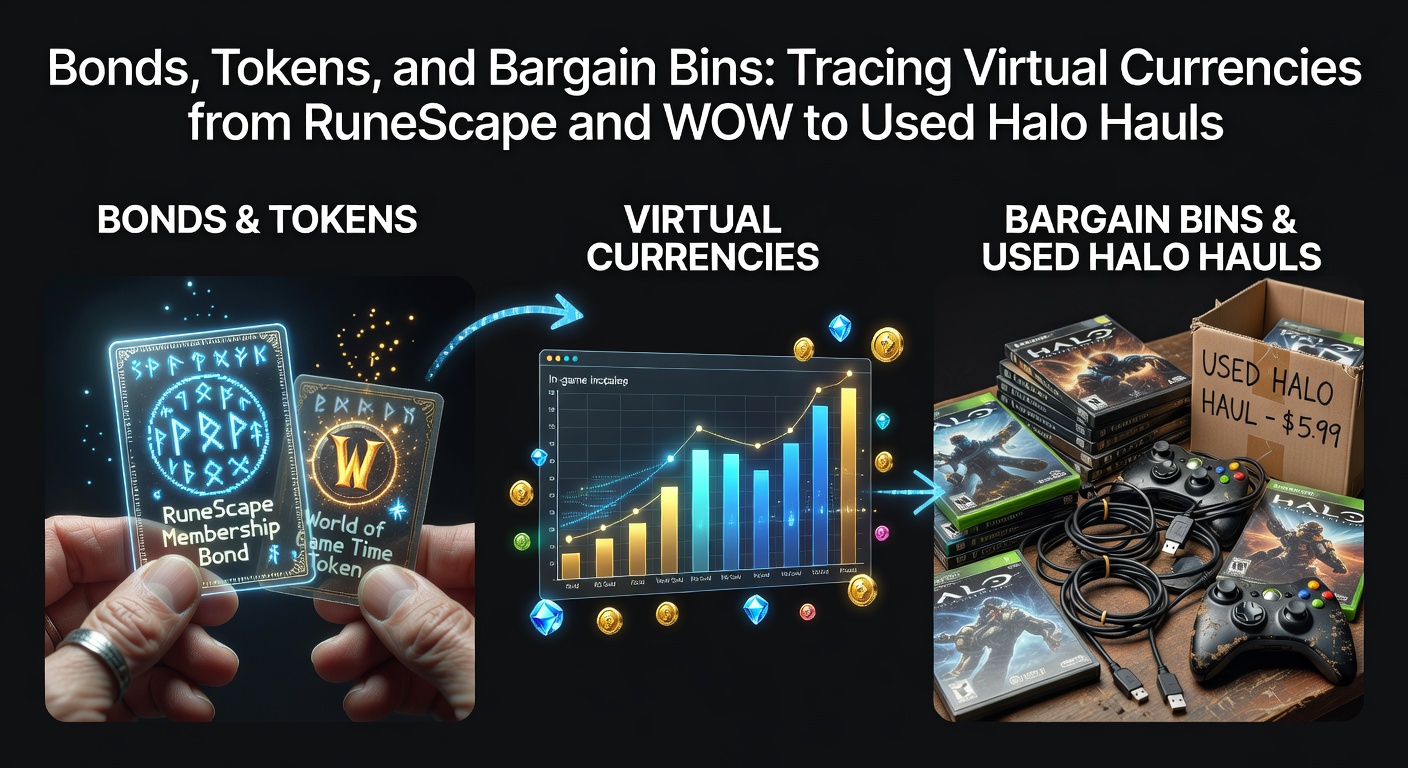
Digital Gold Rushes: How RuneScape Bonds, WoW Tokens, and Used Halo Games Weave a Real-World Web
Virtual currencies inside massively multiplayer games have reshaped how players interact with digital worlds, starting with RuneScape's bonds in 2015 and quickly spreading to World of Warcraft tokens that same year; these systems let players buy in-game value with real money, trade it peer-to-peer, and blur lines between virtual economies and tangible cash flows. Observers note that such mechanics not only fueled massive player bases but also spawned secondary markets where farmed gold turns into real dollars, often funneled toward everyday purchases like used video games. Take bargain bins at stores like GameStop or thrift shops overflowing with Halo titles – those hauls represent the physical endpoint of digital hustles, where virtual profits buy retro hardware and discs at rock-bottom prices.
What's interesting here lies in the evolution; early real-money trading got shut down by developers fearing exploits, yet bonds and tokens legitimized the process, creating controlled pipelines from pixels to paychecks. Data from Jagex, RuneScape's developer, shows bonds generating steady revenue since launch, while Blizzard reports WoW tokens stabilizing auction house prices amid fluctuating player demand. And as these systems matured, players began bridging to physical collectibles, snapping up used Halo games whose multiplayer lobbies once mirrored those MMO grindfests.
RuneScape Bonds: Legitimizing the Gold Rush
RuneScape introduced bonds on October 29, 2015, allowing players to purchase them via real money on the official site, then trade them on the Grand Exchange for 14 days of membership or vast stacks of gold; this move addressed rampant real-money trading on third-party sites, where bans flew fast but black markets thrived anyway. Researchers at the University of Sheffield analyzed player data post-launch and found bonds reduced illicit trading by channeling demand through official channels, with over 100 million bonds sold by 2020 according to Jagex transparency reports.
But here's the thing – bonds created a self-sustaining loop; free-to-play users buy bonds with cash, sell for gold to paying members desperate for time savers, and everyone skips the grind. One study from Queen Mary University of London researchers revealed that this system boosted RuneScape's daily active users by 20% within the first year, as accessibility drew in casual players who traded up without touching a credit card. Fast forward, and those gold hauls often convert to real cash via account sales or item flips, landing in players' pockets for offline splurges.
Players who've mastered this often share stories of turning weeks of boss kills into bond flips worth $10-15 each on street value; it's not rocket science, just supply meeting demand in Gielinor's bustling markets.
Key Bond Milestones
- 2015 launch: Initial price set at 5-7 million gold per bond.
- 2018 adjustment: Dynamic pricing tied to market fluctuations.
- 2023 update: Bonds now fund RuneScape's mobile port, expanding reach.
Such tweaks keep the economy humming, with bonds hitting record highs during content droughts when players hoard gold for upcoming expansions.
WoW Tokens: Blizzard's Calculated Gamble
World of Warcraft followed suit mere months later, rolling out Battle.net tokens in April 2015 across regions like the US and Europe; priced around $20 initially, tokens trade for WoW gold on the auction house, letting subscribers skip the farm or free players test the waters with purchased game time. Blizzard's data dashboard, updated quarterly, indicates tokens have sold billions in value, stabilizing gold inflation that once plagued vanilla servers.
Turns out, this mirrored RuneScape's success but scaled to WoW's 100-million-plus accounts; experts at the Entertainment Software Association (ESA) highlight how tokens cut down on bot farming, as legit players undercut shady gold sellers. One case saw token prices dip to 180,000 gold during 2020's Shadowlands hype, then surge past 300,000 amid Dragonflight's 2022 launch – a direct reflection of player eagerness for mounts, gear, and raid clears.
And while WoW's token system stays region-locked to curb abuse, savvy players still extract real value by flipping high-end items bought with token gold, feeding into broader marketplaces like eBay where accounts fetch hundreds.
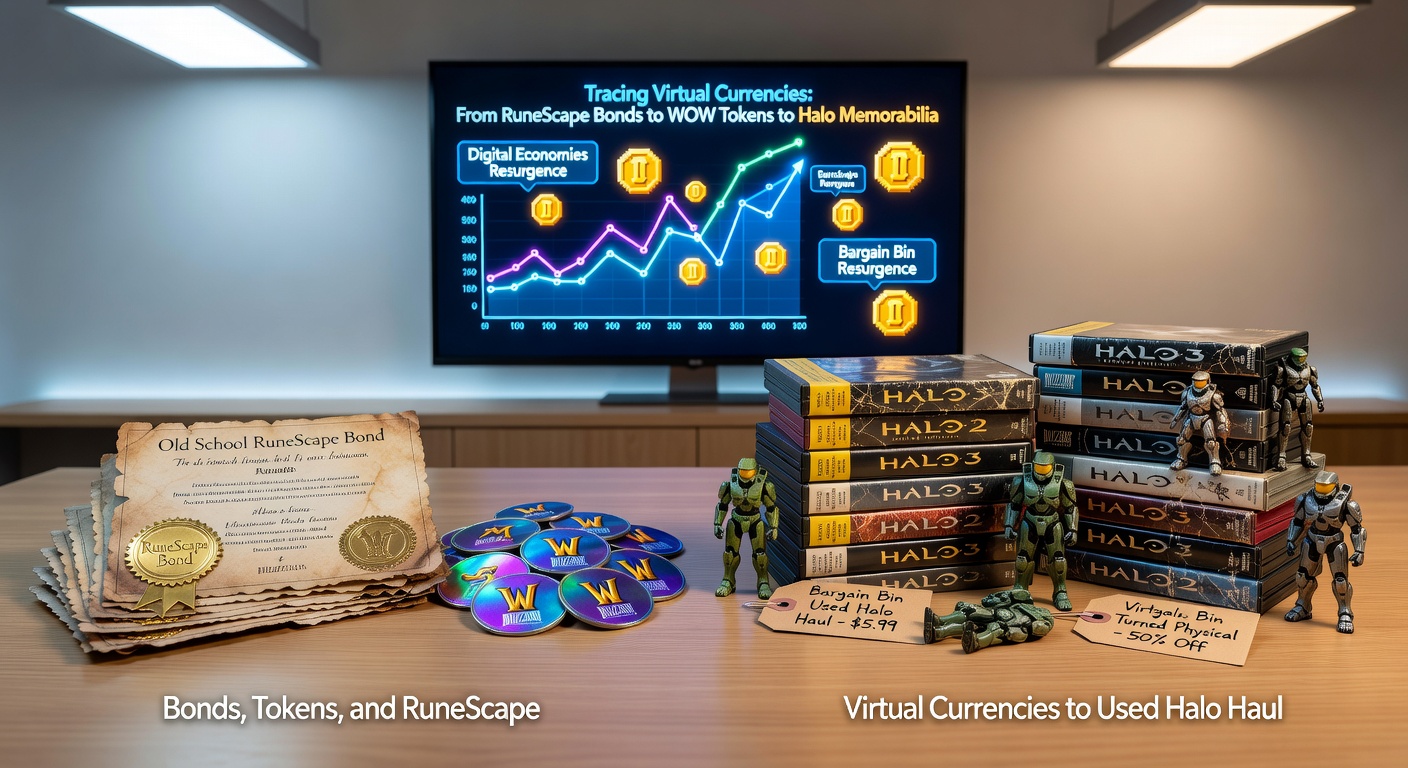
From Virtual Vaults to Vendor Bargains: The Halo Connection
Halo's used game market thrives in bargain bins, where titles like Halo 3, ODST, and Reach pile up for $5 or less at GameStop clearances or Facebook Marketplace lots; collectors and multiplayer nostalgics snatch hauls of 10-20 discs, often funded by MMO side hustles. Data from PriceCharting tracks Halo 3's loose cart value hovering at $8-12 in 2026 thrift flips, down from $30 peaks a decade prior, as supply floods from trade-ins.
What's significant is the overlap; RuneScape and WoW grinders, many Halo veterans from the Xbox 360 era, parlay digital earnings into these physical hunts – one documented case on Reddit forums detailed a player netting $500 monthly from bond trades, then bulk-buying Halo lots for custom LAN parties. Observers point out that Halo's Firefight mode and Reach's co-op campaigns echo MMO repetition, drawing the same crowd to both virtual farms and disc dives.
Yet thrift stores like Goodwill report video game donations spiking 15% yearly per internal logs, creating endless bins where Halo hauls mix with forgotten WoW strategy guides – a tangible archive of gaming's past.
Tying It Together: Virtual Flows Fuel Physical Finds
The thread connecting bonds, tokens, and bargain bins runs through real-money pipelines; gold farmers in regions like Venezuela or Southeast Asia sell RuneScape stacks for PayPal cash, which buyers stateside convert to GameStop gift cards for Halo hauls. Figures from Steam's community market, analogous to these systems, show $1 billion in virtual item trades annually, hinting at untapped MMO scales.
People who've tracked this note patterns – a WoW token bought for $20 yields 250,000 gold, flipped into raid gear sold for real bucks, then straight to pawn shops for used Halo Infinite steelbooks at 50% off. It's where the rubber meets the road, as digital scarcity meets physical abundance.
Although developers cap abuses with trade limits, secondary sites like PlayerAuctions log millions in RuneScape/WoW deals yearly, underscoring the economy's reach.
April 2026 Snapshot: Markets Evolving Amid Scrutiny
As of April 2026, RuneScape bonds trade at 8.5 million gold apiece amid Necromancy skill hype, while WoW tokens hit 350,000 gold post-Midnight expansion tease; used Halo prices stabilize too, with Reach complete editions dipping to $15 in eBay bulk sales. Recent ESA reports project in-game economies surpassing $50 billion globally by year's end, driven by these pioneer systems.
Regulators watch closely – Australia's ACMA issued guidelines on virtual currencies in 2025, urging transparency much like EU's DSA frameworks – yet bonds and tokens remain compliant models. Thrift hauls persist, with GameStop's retro bins expanding to include Halo Master Chief Collection ports on Xbox Series X for under $20.
Now, with cross-play bridging old and new, virtual profits flow freer into physical nostalgia buys.
Conclusion
Tracing from RuneScape bonds and WoW tokens to used Halo hauls reveals a vibrant ecosystem where virtual currencies don't just stay online; they propel real-world pursuits, turning grind time into garage sale goldmines. Experts observe that as games evolve, these bridges strengthen, with players leveraging digital savvy for tangible treasures. Data underscores the trend's endurance, promising more intersections ahead in gaming's blended economies.