Tracing Procedural Generation's Influence on Exploration Tactics in Roguelike Survival Titles
Sofia Patterson · Aug 21, 2026
Tracing Procedural Generation's Influence on Exploration Tactics in Roguelike Survival Titles
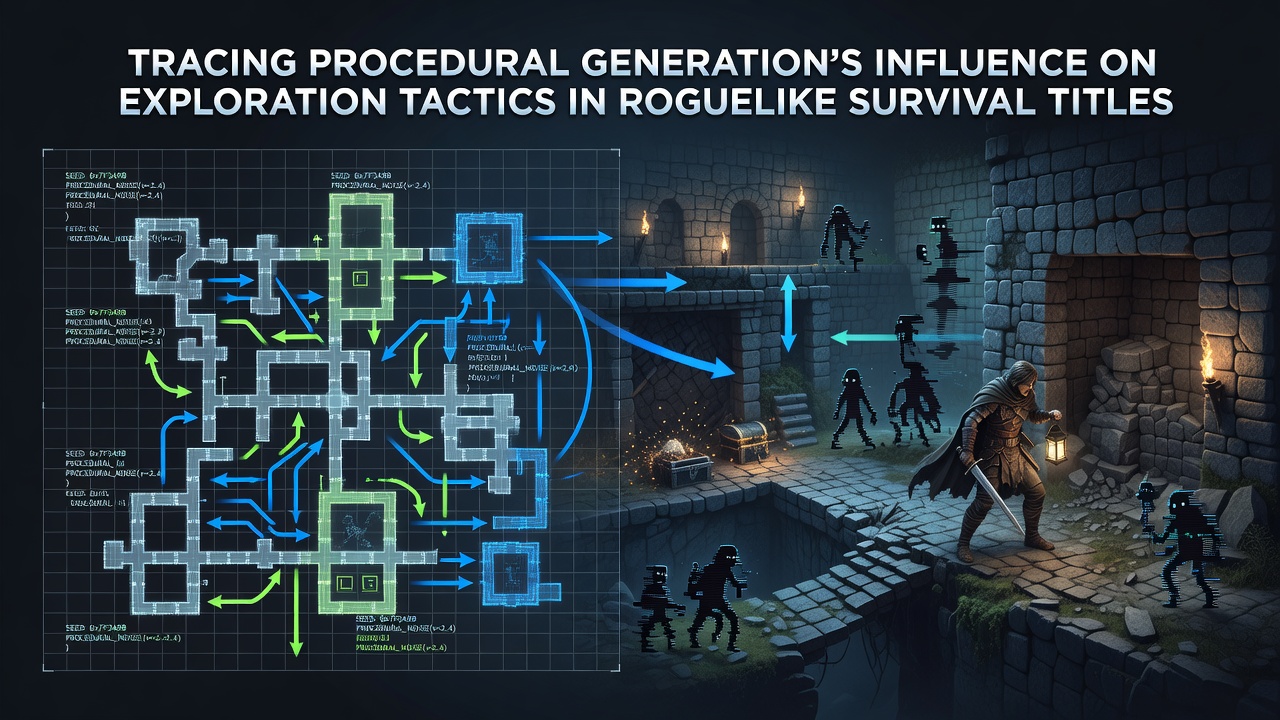
Procedural generation has shaped roguelike survival titles since the early days of computer gaming, and developers continue to refine these systems to alter how players approach unknown environments. Games in this category rely on algorithms that create levels, resources, and threats anew with each session, which forces participants to adjust their search patterns rather than rely on memorized layouts. Observers note that this design choice emerged prominently in titles influenced by Rogue from 1980, where dungeon layouts shifted constantly and survival depended on quick adaptation to new spaces.
Data from industry reports indicates that such mechanics increase replay value, since fixed maps would allow players to optimize routes after initial attempts. In survival contexts the stakes rise because limited resources and permadeath mechanics combine with random layouts, compelling people to prioritize scouting high ground, marking landmarks, and conserving stamina for potential retreats. Researchers at the University of Alberta have documented how these elements train players to gather information rapidly while minimizing exposure to hazards that appear in unpredictable locations.
Core Mechanics Driving Tactical Shifts
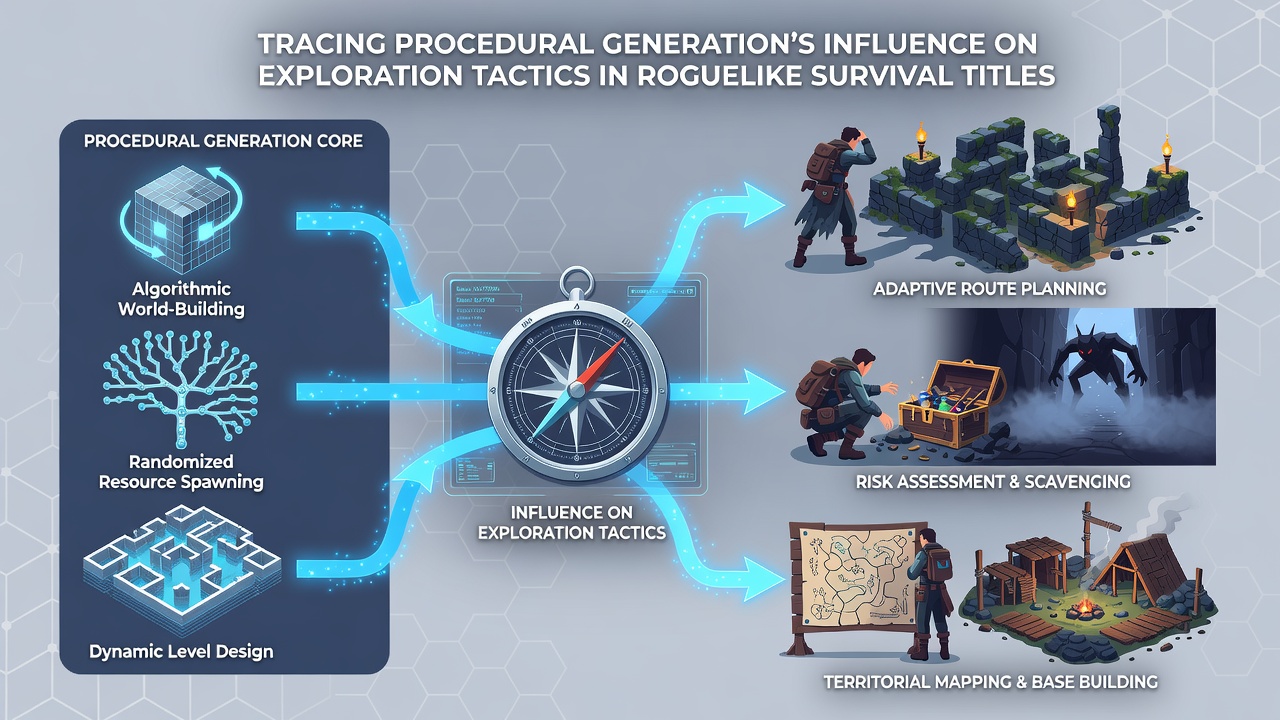
Algorithmic placement of biomes, loot caches, and enemy spawns creates situations where standard movement strategies fail across multiple runs, so players develop layered decision trees that account for multiple variables at once. For instance, a survival roguelike might generate water sources near hostile territories on one playthrough and in open clearings on another, which pushes individuals to scan horizons for visual cues before committing to a path. Those who study player behavior report that participants often circle new areas first, establishing mental maps that incorporate elevation changes and vegetation density as indicators of resource density.
Turn-based systems common in roguelikes allow time for such observation, whereas real-time survival entries add pressure that rewards split-second choices based on partial information. And yet both approaches lead to similar outcomes where exploration becomes an exercise in risk assessment rather than linear progress. Figures from the Entertainment Software Association reveal steady growth in titles blending these genres, with many incorporating weather or seasonal cycles that further randomize visibility and movement costs.
Case Examples Across Decades
Early entries like NetHack and ADOM established foundations by randomizing room connections and item distributions, which taught generations of players to treat every corridor as potentially lethal until verified. Modern examples build on this by layering survival layers such as hunger, temperature, and crafting requirements onto the same random skeletons. One study revealed that players in these environments spend a higher percentage of early game time on reconnaissance compared to titles with static worlds, because repeated failures reinforce the value of cautious expansion.
Take Dwarf Fortress, where procedural history and geography generate unique continents each time, and survival hinges on locating safe sites before seasonal threats arrive. Participants learn to read geological features as clues to underground resources, adjusting dig plans on the fly rather than following preset blueprints. In August 2026, presentations at game design conferences highlighted how newer engines allow finer control over procedural parameters, enabling developers to tune difficulty curves without removing the core uncertainty that drives tactical innovation.
Player Adaptation Patterns
Community data logs show recurring sequences where newcomers first attempt direct paths to visible objectives, suffer setbacks, and then adopt perimeter-scanning habits that improve long-term success rates. This progression appears consistently across platforms, suggesting the influence stems from design rather than individual preference. Observers note that experienced players often maintain multiple save states or practice runs specifically to test how different generation seeds affect optimal routes, turning exploration into a meta-game of probability management.
Yet the same systems can produce frustrating dead ends when algorithms cluster threats too densely, which has prompted some studios to introduce controllable sliders for generation intensity. Research indicates these adjustments help retain broader audiences without diluting the core challenge that distinguishes the genre. External factors such as modding communities further extend these tactics, as players introduce new algorithms that emphasize vertical exploration or resource clustering in novel ways.
Conclusion
Procedural generation continues to redefine exploration in roguelike survival titles by removing reliable landmarks and forcing constant reevaluation of surroundings. Evidence from academic and industry sources confirms that these mechanics cultivate flexible decision-making skills that transfer across different games in the category. As engines advance and more titles launch with refined systems, the interplay between randomness and player strategy will likely remain a central focus for both creators and participants seeking fresh challenges in dynamic worlds.