Tracking Elusive Trophies in Expansive Virtual Realms: A Closer Look at Collection Patterns
Logan Klein · Aug 18, 2026
Tracking Elusive Trophies in Expansive Virtual Realms: A Closer Look at Collection Patterns
Expansive virtual realms present players with intricate systems of trophies and achievements that span hidden locations, challenging encounters, and long-term progression goals, and researchers have documented distinct collection patterns across multiple genres since the early 2010s. Data from industry reports reveal that completion rates vary significantly depending on game design elements such as world size, reward density, and narrative integration, with figures from the Entertainment Software Association showing that roughly 12 percent of players pursue full trophy lists in open-world titles released between 2020 and 2025.
Analysts at various academic institutions have identified several recurring behaviors among trophy hunters, including systematic mapping of exploration zones, repeated revisits to previously cleared areas, and cross-referencing of in-game hints with external databases. Studies conducted by teams at the University of Alberta demonstrate that players who adopt structured tracking methods complete collections 35 percent faster than those relying on unstructured exploration, although total playtime often increases due to teh added layers of documentation and route optimization.
Common Collection Patterns in Large-Scale Environments
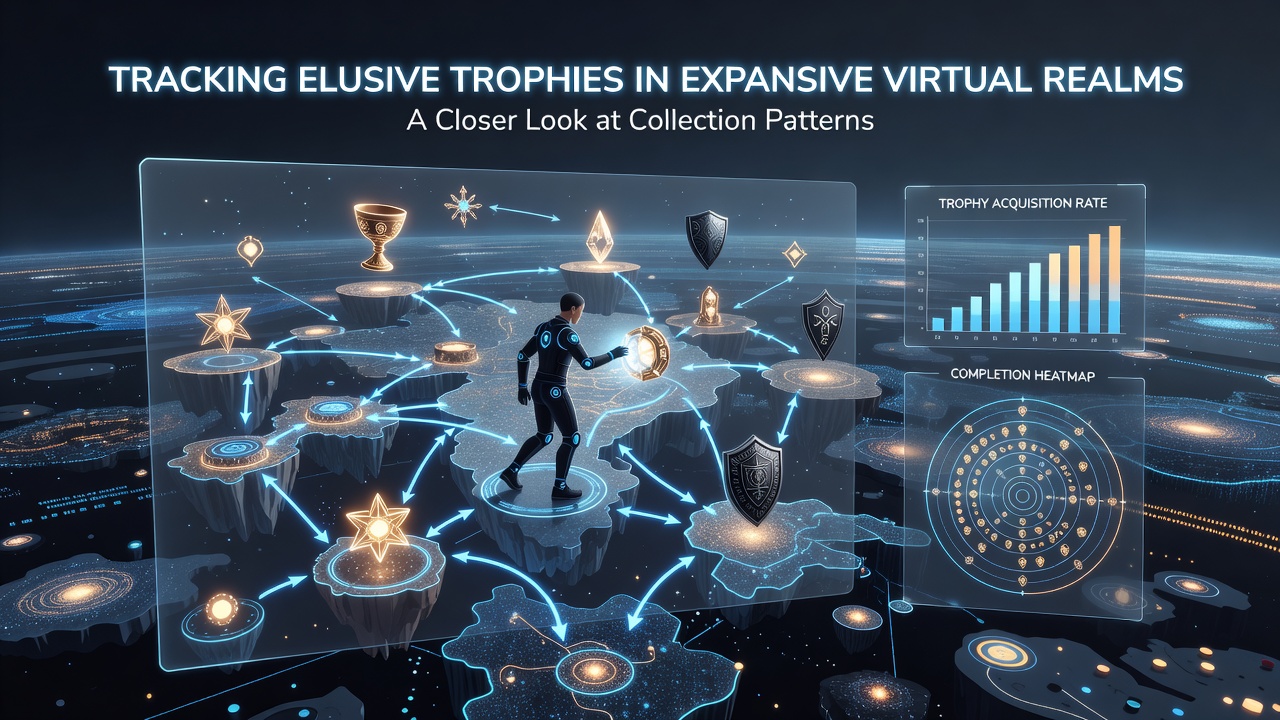
One pattern observed across numerous titles involves the prioritization of geographically clustered objectives, where players tackle nearby trophies before moving to distant regions, and this approach reduces travel time while allowing incremental progress tracking. Another frequently noted strategy centers on temporal events or seasonal updates, during which developers introduce limited-time collectibles that encourage players to log in during specific windows, such as those scheduled for August 2026 in several upcoming expansions.
Observers note that some participants focus exclusively on combat-related trophies, bypassing exploration or narrative achievements entirely, whereas others adopt a layered method that alternates between story missions and side objectives to maintain engagement. Research published in the Journal of Gaming Studies indicates that hybrid approaches correlate with higher overall completion percentages across expansive realms, particularly when players maintain detailed progress logs or use built-in tracking interfaces provided by platform holders.
Data Insights and Regional Variations
Statistics compiled by European game industry bodies show that collection completion rates differ by region, with higher percentages recorded in markets where digital storefronts prominently feature achievement showcases. In North American datasets, players tend to concentrate efforts on multiplayer-linked trophies, while Australian surveys highlight stronger interest in single-player exploration milestones. These variations suggest that cultural and platform-specific factors influence how individuals approach trophy hunting in vast virtual spaces.
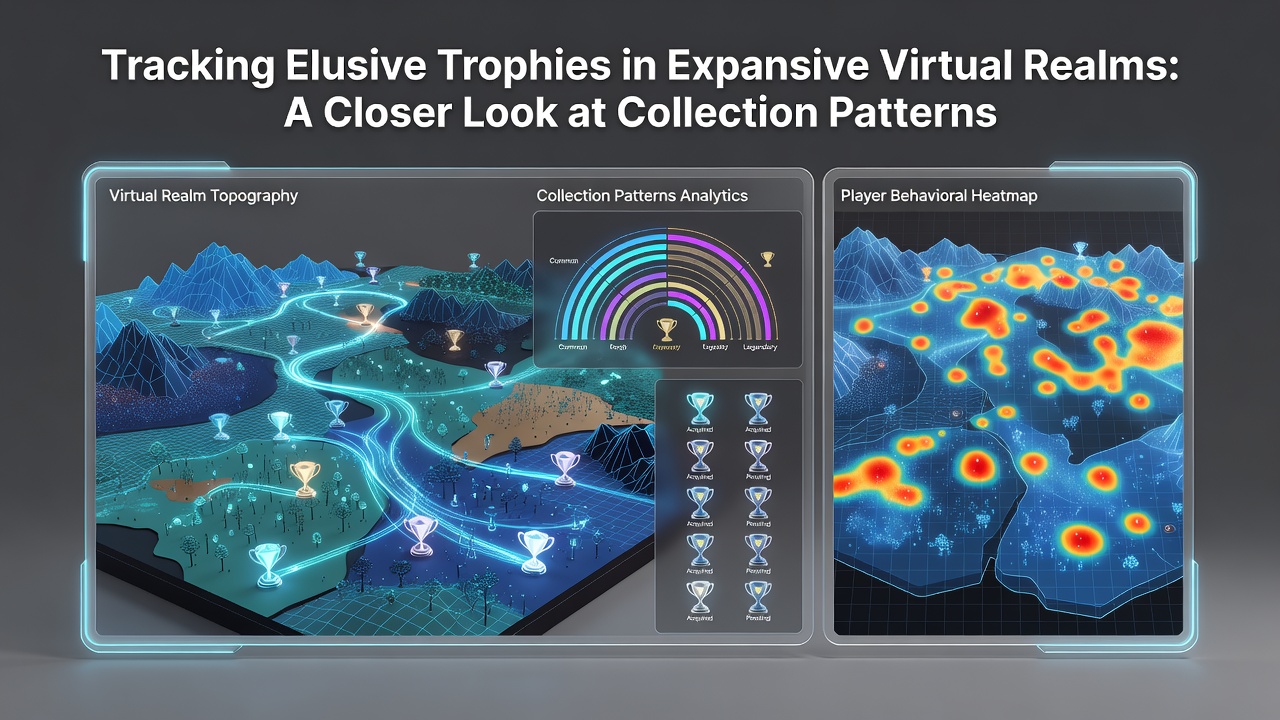
Platform analytics from major console manufacturers further reveal that trophy rarity labels affect player behavior, with ultra-rare items prompting extended search periods and community collaboration through forums and shared maps. Data indicates that games offering dynamic world changes, such as weather systems or day-night cycles, often see increased trophy pursuit because these mechanics create additional layers of discovery that players must time correctly.
Tools and Community Resources
Community-driven databases and third-party applications have become integral to modern collection efforts, allowing players to cross-reference trophy requirements with precise coordinates and spawn conditions. Reports from research groups at the University of Melbourne confirm that access to such resources correlates with elevated completion rates, especially in titles where official in-game maps remain intentionally vague. Yet many developers continue to refine native tracking systems to reduce reliance on external tools, introducing features like automatic progress syncing and visual indicators that update in real time.
Patterns also emerge around social dynamics, where groups coordinate efforts to locate elusive items that require multiple participants or specific team compositions. Evidence from industry white papers suggests that these collaborative sessions not only accelerate individual progress but also contribute to broader community knowledge bases that new players consult when entering the same virtual realms later.
Future Developments and Tracking Technologies
As virtual realms grow in scale through procedural generation and larger persistent worlds, developers are experimenting with advanced analytics that adapt trophy difficulty based on aggregate player data. In August 2026 several major releases are expected to incorporate machine-learning elements that adjust collectible placement dynamically, potentially altering established collection patterns observed in previous generations of games. Academic researchers continue to monitor these shifts, noting that such adaptive systems may reduce frustration while maintaining challenge levels for dedicated collectors.
Platform updates have also introduced unified trophy systems across multiple titles, enabling cross-game tracking dashboards that display progress at a glance. These interfaces allow players to identify patterns in their own habits, such as tendencies toward certain trophy types, and adjust strategies accordingly without leaving the primary gaming environment.
Conclusion
Collection patterns in expansive virtual realms reflect a complex interplay of game design choices, player psychology, and technological support systems, with data consistently showing measurable differences based on methodology and regional context. Continued observation by researchers and industry groups will likely yield further insights as new titles launch with enhanced tracking capabilities and evolving world structures.